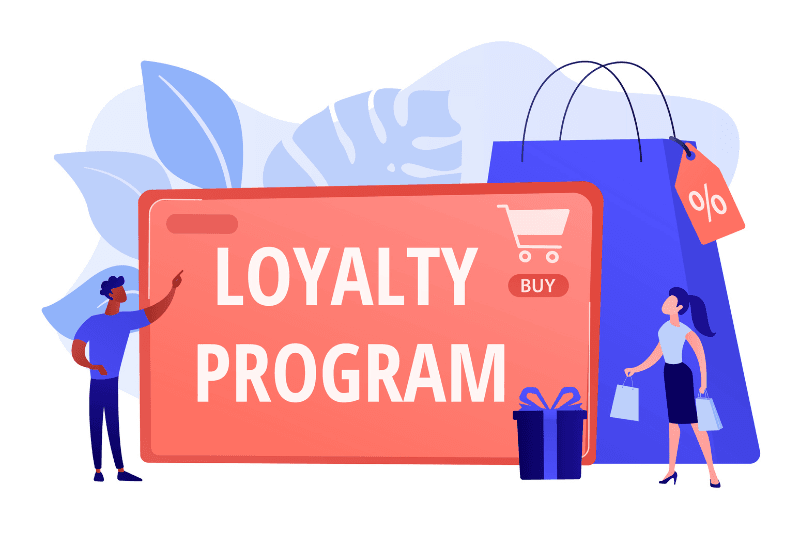
Customer retention has traditionally been measured using behavioural metrics: purchase frequency, average basket size, churn rate, redemption velocity. These metrics are still relevant, but they are only a fraction of what makes a customer truly stay. The more consequential variable, one that the conventional frameworks of loyalty have consistently underweighted, is emotional attachment. Customers with a feeling of something for a brand do not just come back. They are resistant to switching, spend more in the long-term, and actively promote on their network.
The move toward emotion-based brand loyalty is not a trend in the consumer sentiment sense. It is a structural reconfiguration of the way retention economics works, caused by three converging forces: the weakening of transactional differentiation, the proliferation of competing loyalty programs, and the growing sophistication of customers able to identify, and ignore, purely incentive-based programs. For leadership in commercial and marketing: that leads to a strategic question that cannot be postponed, how does a loyalty architecture create emotional resonance at scale and what design choices make that possible?
Why Transactional Loyalty Has a Ceiling
A points program provides a value exchange. A customer spends, accumulates and redeems. The mechanics are obvious, the proposition is rational and the model scales well. Its main drawback, however, is that it is replicable. A competitor with slightly better rates of redemption or a lower earn threshold can displace even a well-established program if the emotional investment is shallow.
Transactional loyalty generates participation. It does not create preference. The distinction is enormously important when customer acquisition costs are high and competitive pressure is intensifying, both of which characterize mature retail, hospitality and financial services markets across the GCC and globally. Organizations that interpret loyalty as merely a discounting mechanism find themselves in an ever more costly battle to retain what was already a fragile relationship.
Emotional loyalty is on a different substrate. It is anchored in the way customers feel whilst interacting with a brand, both during and after the interaction, whether they feel recognised, rewarded in personally meaningful ways, and genuinely valued beyond the transaction. These are not all abstractions, as they have real commercial consequences in terms of lifetime value, referral rates and resistance to competitive switching.
The Mechanics That Create Emotional Engagement
Personalization as a Foundation, Not a Feature
The most direct path to emotional connection is the consistent demonstration that a brand understands an individual customer, not a segment, not a persona, but a specific person’s preferences, history, and context. Loyalty architectures that surface and act on this data at scale, delivering relevant offers, personalized milestones and communications that feel earned rather than automated, creates the conditions for emotional resonance.
This requires more than the ability of CRM. It requires loyalty data to be integrated across channels and made actionable at the point of customer interaction, whether in store, app or through digital touchpoints. Organizations that treat loyalty data as a reporting function rather than a real-time personalization engine always do poorly on this dimension.
Recognition Beyond Spend
Emotional loyalty is strengthened when a brand acknowledges behaviours that go beyond being purely transactional. Celebrating a customer’s anniversary with the brand, recognizing consistent engagement with content or surfacing achievement milestones, these are signals that the relationship goes beyond purchasing. They are structurally cheap to perform but outsized in their effect to perceived value and emotional connection.
The Role of Achievement and Progression
One of the most powerful drivers of emotional engagement is the human response to progress and accomplishment. Well-designed gamified rewards programs leverage this directly — structuring customer journeys around challenges, milestones, badges, and escalating recognition that create a sense of forward movement. When customers experience their relationship with a brand as a progression they are invested in, rather than a passive accumulation of points, the emotional stakes rise considerably.
The critical design distinction is between mechanics that are meaningful and those that are arbitrary. Challenges that are based on a customer’s actual behaviour patterns, and milestones that are based on actual engagement instead of thresholds commanded by spend alone, create genuine satisfaction. Poorly calibrated mechanics, challenges that are too difficult, rewards that are tokens, structures that don’t progress, can have the opposite effect, and the result is frustration where investment was supposed to be.
Where Gamification Intersects with Emotional Loyalty
Gamification, used in a commercial manner, is not an entertainment overlay on a loyalty program. It is a systematic approach to maintaining engagement between purchase occasions, building out the emotional texture of the customer relationship, and creating richer first-party data in the process.
A well-configured gamification loyalty program rewards customers for behaviours that extend beyond the transaction: completing a profile, engaging with brand content, participating in community challenges, or referring peers. Each of these touchpoints is an opportunity to strengthen the emotional bond — to make the customer feel seen, capable, and rewarded for engaging authentically with the brand. The cumulative effect of these micro-interactions, when orchestrated coherently, is a relationship that carries significantly more switching resistance than any point balance alone.
For enterprise operators, the additional value is that of data-strategic. Gamified engagement surfaces prefer signals and behavioural patterns that solely transactional programs can not generate. This intelligence becomes a long-term commercial asset which helps with more accurate personalization, segmentation and defensible customer relationships over time.
Emotional Loyalty at the Organizational Level: What Leadership Must Address
Building an architecture of loyalty around emotional engagement is not a product decision. It is a strategic and operation commitment that requires alignment across commercial, technology and customer experience functions.
Several questions require direct leadership attention. First, does the current loyalty infrastructure incorporate and activate customer data in real-time or is it running on batch processing cycles that make personalization reactive, rather than anticipatory? Second, are the touchpoints for loyalty consistent across digital and physical channels or is there a disconnection between digital and physical, depending on how customers engage? Third, are the measures used to assess the performance of loyalty programs limited to participation and redemption rates, or are they supplemented with indicators of emotional involvement, sentiment, referral behaviour, cross-category adoption?
Emotional loyalty is not an option that can be retrofitted onto a transactional architecture with incentive tweaks. It involves conscious program design that starts with an honest evaluation of the state of the current customer relationship and where the organization would like to be.
Conclusion
The shift from transactional to emotion-driven loyalty is not an aspiration. It is a growing commercial reality, which is one that can be measured in the performance gaps between organizations that have invested in emotionally intelligent program design and those that have not. For senior leadership, the implication is clear: loyalty investment must be assessed not solely by its ability to generate repeat purchase, but rather its ability to foster a relationship that can endure the pressure of the competition and create value over time.
Yegertek’s ENGAGE 365 platform supports the full spectrum of loyalty models — from gamification and tiered recognition to hybrid and coalition frameworks — designed to help enterprise brands build loyalty that is felt, not just calculated. Explore what emotionally intelligent loyalty architecture looks like in practice at yegertek.com.
Frequently Asked Questions
What is emotion-driven loyalty and how does it differ from traditional loyalty programs?
Emotion based loyalty, which is based on how customers feel about a brand and not solely transaction based incentives like points or discounts. Traditional programs reward spend; emotion driven programs reward the relationship itself, in terms of personalization, recognition and meaningful engagement. The commercial difference is that of material: emotionally connected customers show a higher lifetime value, lower churn rates, and greater resistance to competitive switching than customers who are involved in purely transactional programs.
Why is emotional engagement increasingly important in loyalty program design?
As loyalty programs multiply across sectors as transactional differentiation is no longer enough to keep things together. Customers who are enrolled in a number of programs at once make active comparisons and a slightly better offer from a competitor can undermine participation fairly quickly. Emotional engagement increases the switching cost beyond the rational, customers who feel genuinely valued and recognized are much more difficult to displace, no matter what incentive structures are offered by the competition. This makes emotional design a defendable commercial asset.
How does gamification contribute to emotional loyalty?
Gamification brings progression, achievement and recognition into the loyalty experience; all things that appeal to intrinsic motivation rather than strictly extrinsic reward. When customers earn badges, complete challenges or progress through milestone journeys, there is a sense of accomplishment associated with the brand. This emotional investment builds up over time, and the way the relationship deepens in this way is something that a static points balance cannot replicate. The quality of the design of the mechanics makes the difference between an effect that is real engagement versus an effect that is superficial novelty.
What data does an emotion-driven loyalty program generate, and why does it matter?
Beyond transaction records, emotion-driven programs capture behavioural signals — content engagement, challenge completion, referral activity, and preference expressions — that reveal customer motivations and affinities at a granular level. This first-party data is commercially valuable for personalisation, segmentation, and predictive modelling. As data privacy regulations tighten across markets including the GCC, organisations that have voluntarily disclosed preference data through engaged loyalty programs are significantly better positioned than those dependent on third-party data sources.