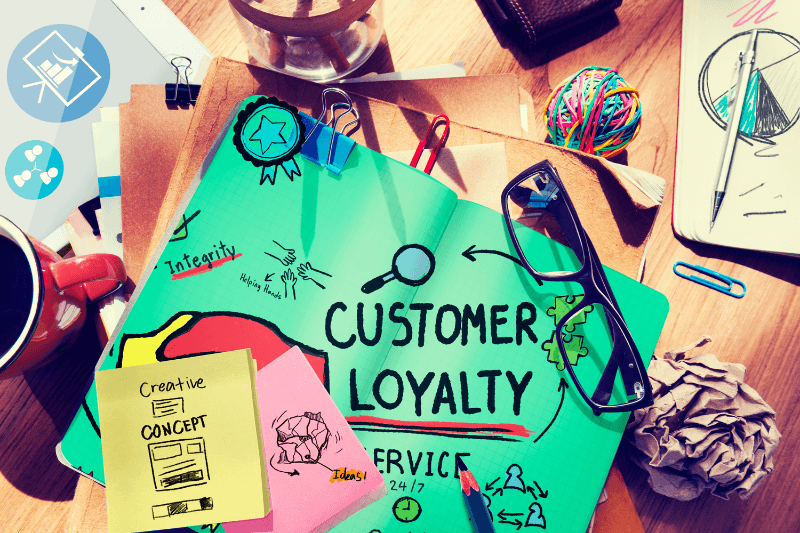
Most enterprises address customer acquisition and customer loyalty programs as distinct functions; one held by marketing, the other held by CRM or retention teams. This structural divide leaves a costing blind spot. The richest source of acquisition intelligence a brand has: first-party behavioral data from its existing loyal customers rarely tells them how or where new customers are targeted.
For enterprise leaders responsible for CAC (cost of acquiring customers), marketing efficiency and sustainable growth, closing this gap is not a desire for the future. It is an operational priority.
The Acquisition Intelligence Hidden Inside Loyalty Programs
Every ongoing loyalty program creates a steady flow of behavioural information: the cadence of purchases, category preferences, redemption behaviours, channel engagement, basket composition and lifetime value trajectories. Individually, these signals are used in making retention decisions. Collectively, they explain exactly who a brand’s most commercially valuable customers are — and what got them there.
This is where the strategic shift occurs. Rather than deploying acquisition budgets against broad demographic segments, enterprise brands that leverage customer loyalty analytics can construct high-resolution profiles of their best customers and use those profiles as acquisition targeting frameworks.
The result of this is predictable: acquisition spend is concentrated on prospects who look very much like customers already proven to provide strong retention rates, high lifetime value and above average referral behaviour. The efficiency gains are structural ones, not incremental ones.
From Retention Signals to Acquisition Models
Identifying the Ideal Customer Profile Through Loyalty Data
The initial analytical process is dividing the existing loyalty base not only by the amount of transactions but by the combination of variables that predict the long-term commercial value. Relevant signals include time-to-second-purchase, cross-category engagement, responsiveness to personalized offers and ongoing participation at all levels of the program.
Customers that display these behaviors constitute a de facto Ideal Customer Profile (ICP), one based on what the customer did in actual performance data, not on assumed persona attributes. When acquisition teams create lookalike audiences, paid media targeting or channel allocation models based on this ICP, they have the benefit of working from verified commercial evidence.
Behavioral Clustering to Refine Targeting Precision
Advanced segmentation goes even further by identifying clusters of behavior within the loyalty base. A grocery retailer, for instance, might learn that a high LTV cluster shops in both fresh and premium categories, engages mainly via mobile and redeems rewards in a short time. A fashion brand may recognize a cluster based on cross-category purchase and seasonal re-engagement.
Each cluster is a different acquisition target with a specific channel, message and offer logic. The precision this enables, compared to demographic or interest-based targeting, materially reduces wasted acquisition spend.
Turning Loyal Customers into Acquisition Assets
Referral Architecture Built on Loyalty Participation
Loyal customers are not only about retention value. When structured properly, they become one of the cheapest channels of acquisition available. Referral mechanics embedded within loyalty programs enable brands to bring their highest-value members forward as advocates, in exchange for rewarding them for bringing in prospects that match their own behavior profile.
The acquisition quality from these referral cohorts tends to be significantly higher than from paid channels. Referred customers typically exhibit faster activation, higher first-year retention, and a propensity to engage with loyalty programs from the outset. This is compounded when customer insights and analytics are used to identify which loyalty members are most likely to generate high-quality referrals and personalize the invitation accordingly.
Social Proof and Community-Led Acquisition
Loyalty communities, influencer loyalty structures and user generated content programs take this further. Members that are serving publicly with a brand’s loyalty ecosystem generate organic acquisition signals, reviews, recommendations, social content that reach net-new audiences at no marginal cost. The loyalty program becomes a retention engine and a brand acquisition surface at the same time.
The Data Infrastructure Required to Execute This Strategy
Connecting loyalty information with acquisition strategy isn’t a reporting exercise. It requires an integrated data infrastructure where loyalty program behavior, CRM, transaction history and campaign response data are unified and accessible to both retention and acquisition teams.
Enterprise leaders should consider if their existing loyalty platform can support this kind of data portability. Platforms that exist as closed retention systems, without APIs, segmentation export capabilities or integration with marketing activation tools, functionally prevent the application of loyalty data to acquisition workflows.
Additionally, data governance and privacy compliance (especially relevant across GCC markets operating under PDPL frameworks and globally under GDPR-aligned regulations) will need to be established before loyalty data can be used for paid targeting or lookalike modeling. Supporting downstream marketing use is a prerequisite rather than an afterthought in ensuring consent architecture.
Conclusion
The most strategically underutilized asset in enterprise customer acquisition is already within the organization. Loyalty programs, when viewed as data infrastructure rather than as retention-only tools, are the source of the behavioral evidence required to obtain customers who are more likely to remain, spend and advocate. For CMOs and CGOs, in terms of their evaluation of acquisition efficiency, the question is no longer whether the loyalty data is useful for acquisition, it is whether or not the right platform and analytical capability exists to extract that value.
To explore how Yegertek’s loyalty and analytics solutions can connect your retention intelligence to acquisition performance, speak with our team.
Frequently Asked Questions
How can loyalty program data improve customer acquisition targeting?
Loyalty data tells you about the behavioral characteristics of your customers who have the highest retained value. By developing acquisition modelling based on these verified profiles, purchase frequency, category mix, channel preference, brands can target prospects with a statistically greater probability of becoming loyal to the brand and lower acquisition cost and better long-term ROI.
What types of loyalty data are most useful for acquisition strategy?
The most actionable signals are time-to-second-purchase, cross-category engagement, reward redemption velocity and tier progression rates. These variables, when combined, determine the behavioral fingerprint of customers likely to deliver high lifetime value so they are the basis of effective lookalike and referral acquisition models.
Can referral programs built on loyalty data outperform paid acquisition channels?
In the context of several enterprises, yes. Referrals generated by high-LTV loyalty members tend to result in quicker customer activation, better first year retention and increased program enrollment rates. When referral mechanics are personalized through behavioral data of loyalty, the quality and volume of referred acquisition increases significantly.
What data infrastructure is needed to use loyalty data for acquisition?
Brands require an integrated platform that unifies loyalty behavior, CRM data and marketing activation tools. Closed loyalty systems with no API-level data portability restrict this ability. Privacy compliance, especially consent frameworks that comply with GDPR or regional laws such as the PDPL law in Saudi Arabia, must also be in place before loyalty data can be used to inform paid targeting.