Loyalty programmes start with enthusiasm and lapse into autopilot. Points are added, rewards redeemed and the programme is allowed to operate without anyone asking if it still delivers strategic objectives. Meanwhile, customer expectations shift, competitors offer more compelling alternatives, and what once felt differentiated becomes table stakes.
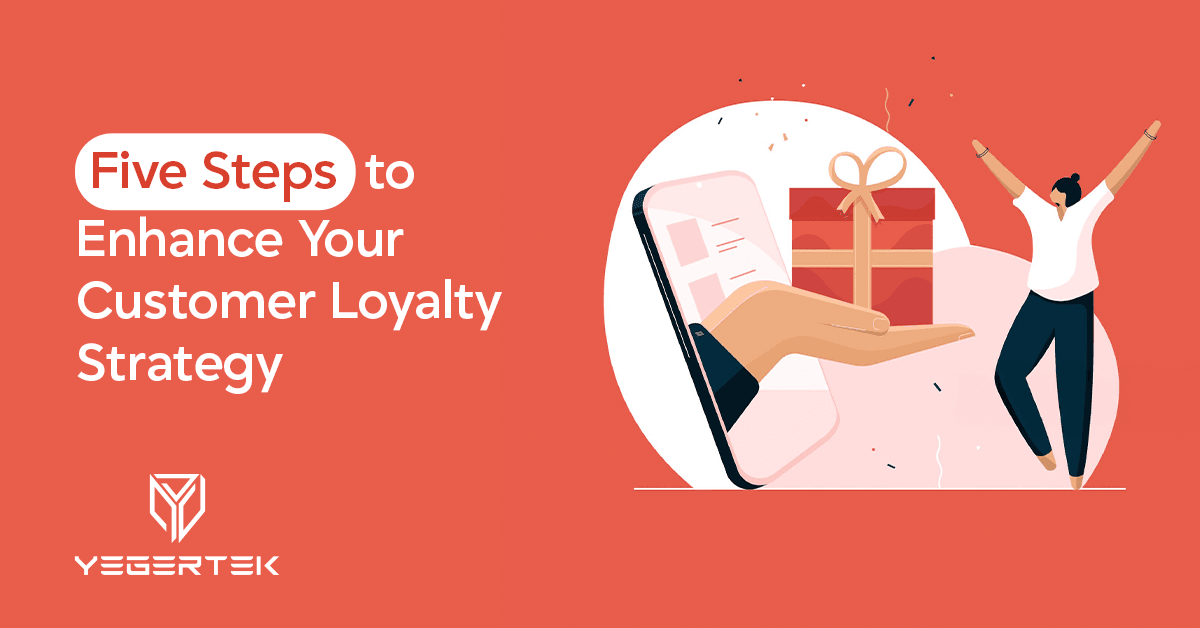
Improving your loyalty strategy is not about doing everything at once. It takes specific improvements that build up over time. The following five steps provide a framework of systematic enhancement that delivers measurable impact without the disruption of a complete programme redesign.
Step One: Audit Your Current Programme Against Customer Expectations
Most loyalty programmes are based upon what the business wants to incentivise rather than what the customers actually value. This misalignment results in programmes that look good on paper but fail to motivate behavioural change.
Start by getting direct feedback from your members. What are the rewards that they really desire? How do they like to interact with the programme? What are the points of friction that frustrate them? The answers often come as a surprise to programme managers who have been too close to operations to see it clearly.
Analyse redemption patterns with fresh eyes. Low redemption rates could reflect rewards that do not resonate. High point expiration rates indicate that members are not engaged enough to make use of what they are earning. Concentration of redemptions in a narrow reward category reveals missed opportunities to diversify your value proposition.
Compare your programme structure with your competitors and your adjacent industries. Customers do not assess your programme in isolation – they will compare it to every other loyalty experience they come across. Understanding in what areas you are lagging behind, and in what areas you are leading helps with prioritisation.
Step Two: Personalise Beyond The Basics
Generic earn-and-burn mechanics treat all customers equally. A first-time purchaser and a 10-year advocate receive the same points per transaction, the same reward options, and the same communications. This uniformity is a waste of the relationship equity that you have built with your best customers while not speeding up engagement with newer ones.
True personalisation requires segmentation that goes beyond simple tier structures. Behavioral data should drive different experiences. A customer who is regularly buying from one category may be offered bonus points for exploring adjacent categories. A member nearing a redemption point may get a nudge with a relevant reward suggestion. A lapsed member may be offered a reactivation offer based on their historical preferences.
Modern Customer loyalty solutions that are built on CRM foundations allows for this personalisation to happen at scale. And when your loyalty platform shares infrastructure with your customer data platform, personalisation becomes operationally feasible as opposed to a manual exercise that cannot keep up with programme volume.
Step Three: Expand Value Beyond Transactions
Programmes, which only reward purchases, miss opportunities to further engage with the consumer through non-transactional interactions. Every touchpoint with your brand is an opportunity to strengthen the relationship – and loyalty programmes can acknowledge these instances.
Consider rewarding programme enrolment completion, profile update, participation in surveys, app downloads, social media engagement, event participation, referrals, reviews and user generated content. Each of these actions suggests investing in your brand that deserves recognition even if no revenue changes hands.
The key is calibrating point values appropriately. Non-transactional earning should be done without compromising the programme economics. A product review may merit a small award of points that recognizes the contribution but does not imply that product reviews alone will be sufficient to earn large rewards.
This expansion also provides more touchpoints between your brand and your members. A programme that only engages customers when they buy becomes invisible between purchases. A programme that acknowledges varied interactions remains in the customer life cycle.
Step Four: Integrate Loyalty Across All Channels
Fragmented loyalty experiences frustrate customers and leave value on the table. A member who gains points in-store without being able to view their balance online is disconnected. A customer who redeems rewards through your app, but not when visiting a physical location, asks whether the programme does know who they are.
Omnichannel integration demands technical infrastructure that will consolidate customer identity and programme data across touchpoints. Every interaction – whether through e-commerce, mobile app, physical store, call centre or partner location – should be in line with the same member profile and programme status.
This integration goes on to the communication channels as well. Loyalty messaging through email, SMS, WhatsApp and push notifications should coordinate, rather than compete. A member that receives an update of points balance by one channel should not receive the same message through three others at the same time.
Working with experienced loyalty solution providers such as Yegertek helps to speed this integration. Enterprises that are trying to construct omnichannel loyalty infrastructure from scratch are often underestimating the complexity involved. Platforms that have out of the box integrations and proven deployment methodologies mitigates implementation risk and increases time to value.
Step Five: Establish Continuous Optimisation Practices
Loyalty strategy enhancement is not a once-and-for-all project – it is an ongoing discipline. The programmes that work better over time are those with proven practices for measurement, experimentation and iteration.
Define Key Performance Indicators that are aligned with strategic objectives. Member acquisition rate, active member percentage, earn and burn velocity, programme attributed revenue lift and customer lifetime value differences between members and non-members all give insight into programme health.
Implement testing frameworks for controlled experimentation Before implementing a new reward option or communication strategy programme-wide, pilot test it on a sample of members and measure the impact compared to a control group. This discipline ensures that well-intentioned changes do not pull performance in the wrong direction.
Review programme performance on a regular basis with cross-functional stakeholders. Loyalty involves marketing, operations, finance, and technology – and optimisation opportunities often arise at the intersections of these functions.
How Yegertek Aids in Loyalty Strategy Enhancement
Yegertek has in-depth experience in loyalty programme design, implementation and optimisation across the retail, hospitality, F&B and financial services sectors across the UAE, MENA and South Asia markets. As a Microsoft Gold Partner, Yegertek delivers the Engage 365 platform based on Microsoft Dynamics 365 – providing enterprise grade infrastructure to support the personalisation, omnichannel integration and continuous optimisation practices outlined above.
Beyond the technology, Yegertek works through a strategy-plus-technology approach that deals with programme design as well as technical implementation. This approach ensures that improvements are based on a good loyalty strategy and not just adding features for the sake of it.
For organisations who are aware that their existing programme can be improved, Yegertek provides the combination of the regional understanding of the market, the technical capability, and the loyalty expertise to turn that into something measurable and real. The route from good enough to exceptional performance in loyalty tracks takes us through exactly the type of systematic improvement this framework outlines – and with the right partner that journey becomes much more attainable.