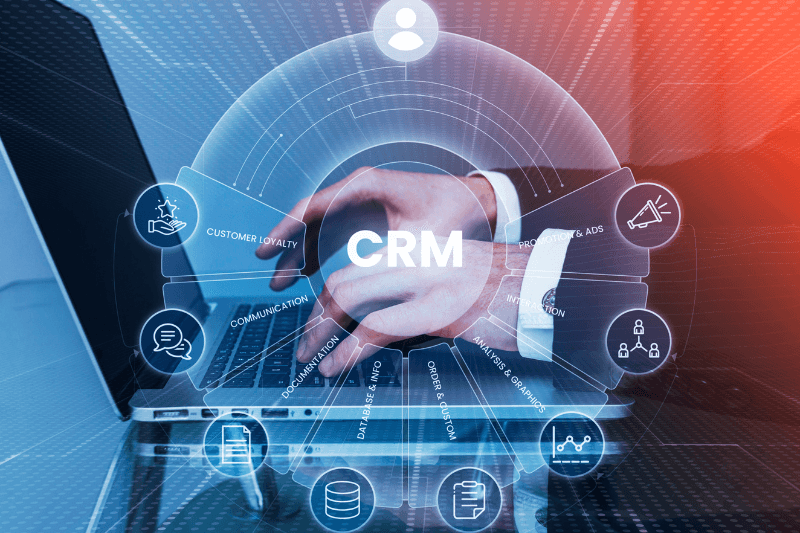
CRM platforms have been central to how enterprises manage customer relationships for decades. But for most of that time, they functioned primarily as record-keeping systems: repositories of contact details, transaction logs, and interaction histories that teams queried manually. The intelligence lived in the people using the system, not in the system itself.
That dynamic is changing rapidly. AI is transforming CRM from a passive data store into an active decision-making engine that can predict behaviour, automate engagement, and personalise experiences at a scale no human team could achieve alone. For C-suite leaders and senior CX strategists, the implications are significant, not just for operational efficiency, but for how customer experience becomes a measurable competitive advantage.
Here are five specific ways AI is reshaping CRM and CX, and what enterprise leaders should be paying attention to right now.
1. Predictive Customer Intelligence
Traditional CRM analytics told you what happened. AI tells you what is likely to happen next.
Predictive models built into modern CRM platforms analyse transaction patterns, engagement frequency, sentiment signals, and behavioural triggers to forecast outcomes like churn risk, purchase propensity, and lifetime value trajectory. Instead of reacting after a customer disengages, teams can intervene proactively, whether through a personalised offer, a service recovery action, or a targeted retention campaign.
This is especially powerful when CRM is connected to a structured loyalty programme. The behavioural data generated through loyalty interactions (points earned, rewards redeemed, tiers achieved, offers ignored) provides a rich signal layer that AI models can learn from. Platforms like ENGAGE 365, built on Microsoft Dynamics CRM, capture this data across every channel, giving predictive models the depth they need to generate actionable forecasts, not just statistical noise.
The shift from descriptive to predictive analytics is what turns CRM from a reporting tool into a revenue-protection system.
2. Hyper-Personalisation at Scale
Personalisation is not new. What AI changes is the ability to deliver it at scale, in real time, across every touchpoint.
Legacy CRM personalisation relied on broad segments: “high-value customers,” “lapsed buyers,” “new members.” AI enables micro-segmentation based on individual behaviour patterns, preference signals, and contextual triggers. A customer browsing a specific product category on your e-commerce platform at a specific time, having previously redeemed a loyalty offer in the same category, can receive a personalised recommendation within seconds.
This level of precision requires two things: clean, unified customer data and the intelligence layer to act on it. Customer Insights capabilities within Dynamics 365 unify profiles from multiple sources, while RUBIX Analytics provides the analytical depth to understand what those profiles actually mean. AI connects the dots between data and action, making personalisation feel intuitive rather than intrusive.
For enterprises running crm loyalty programs, this creates a compounding effect. Every personalised interaction generates new data, which refines the AI model, which improves the next interaction. The flywheel accelerates with every customer touchpoint.
3. Intelligent Service Routing and Resolution
Customer service is where CX reputations are built or broken, and AI is fundamentally changing how service operations function.
AI-powered CRM systems can now analyse incoming customer queries in real time, classify them by intent and urgency, assess customer value and history, and route them to the most appropriate resolution path. A high-value loyalty member with a billing issue gets escalated to a senior agent with full context. A routine enquiry gets resolved instantly through a conversational AI agent.
This is not about replacing human agents. It is about ensuring that human expertise is deployed where it matters most, while routine interactions are handled with speed and accuracy. Dynamics 365 Customer Service provides the framework for this kind of intelligent orchestration, combining AI routing with full visibility into each customer’s history, preferences, and loyalty status.
The measurable outcomes are significant: faster resolution times, higher satisfaction scores, and lower cost-to-serve, all driven by AI making smarter decisions about where to direct each interaction.
4. Automated Campaign Orchestration
Marketing teams have always struggled with the gap between knowing what to do and having the capacity to execute it. AI closes that gap.
Within a CRM-connected marketing automation environment, AI can determine the optimal message, channel, timing, and frequency for each customer based on their individual engagement history. It can trigger campaigns automatically when specific behavioural thresholds are met: a loyalty member approaching tier expiry, a customer whose purchase frequency has dropped, or a new member who hasn’t engaged beyond their initial sign-up.
Customer loyalty program software that integrates with AI-driven marketing orchestration turns static campaign calendars into dynamic, responsive engagement systems. The result is not just better open rates or click-through metrics. It is a fundamentally different relationship with each customer, one that responds to their behaviour rather than broadcasting at them on a pre-set schedule.
For brands managing complex loyalty ecosystems, whether tiered, gamified, or hybrid, AI-driven orchestration ensures every communication is contextually relevant and strategically timed.
5. Real-Time Clienteling and In-Store Intelligence
AI’s impact on CRM extends beyond digital channels. For retailers and hospitality brands, it is reshaping the in-store experience through intelligent clienteling.
When a loyalty member walks into a store, AI-powered clienteling tools can surface their purchase history, product preferences, size data, and outstanding offers to the sales associate in real time. The interaction becomes consultative rather than transactional, guided by data but delivered through human connection.
PUZZLE Clienteling is designed for exactly this scenario, empowering in-store teams with dynamic customer data so they can offer a personalised experience that drives both conversion and loyalty. When connected to ENGAGE 365 and the broader Dynamics 365 ecosystem, it creates a seamless bridge between digital intelligence and physical customer interactions.
This is where AI in CRM stops being an abstract concept and becomes something customers actually feel: a better, more attentive, more relevant experience every time they engage with the brand.
What Leadership Should Prioritise
AI in CRM is not a single feature to toggle on. It is a capability that depends on data quality, platform architecture, and organisational readiness. The enterprises that will extract the most value from AI-driven CRM and CX are those that have already invested in:
A unified customer data foundation through loyalty and engagement platforms. Strong analytics capabilities to inform and validate AI outputs. Integrated sales, service, and marketing workflows within a single CRM ecosystem.
The technology is ready. The question is whether your data and your organisation are ready to use it.
Connect with Yegertek’s team to assess how AI can elevate your CRM and customer experience strategy.
Frequently Asked Questions
Q: How does AI improve CRM for customer experience? AI transforms CRM from a passive database into an active intelligence layer. It predicts customer behaviour, automates personalisation, routes service interactions intelligently, and triggers campaigns based on real-time signals, enabling enterprises to deliver faster, more relevant experiences across every touchpoint.
Q: Can AI in CRM help reduce customer churn? Yes. AI analyses behavioural patterns, engagement decline, and sentiment signals to identify at-risk customers before they leave. This allows teams to trigger proactive retention actions, such as personalised offers or service interventions, through platforms like ENGAGE 365 and Dynamics 365.
Q: How does AI-powered CRM work with loyalty programmes? Loyalty programmes generate rich behavioural data that AI models use to forecast behaviour, personalise rewards, and optimise engagement timing. The combination creates a compounding data advantage where every loyalty interaction improves the accuracy of future AI-driven decisions.
Q: Is AI in CRM only relevant for large enterprises? No. Mid-sized businesses with structured customer data can also benefit significantly. The key requirement is clean, unified data and a CRM platform capable of supporting AI workflows. Yegertek delivers solutions scaled to organisational maturity across multiple industries.
Q: What should businesses prioritise before adopting AI in CRM? Start with data quality and unification. AI models are only as effective as the data feeding them. Invest in a customer engagement platform that captures structured, consent-based data, then layer in analytics and automation capabilities progressively.