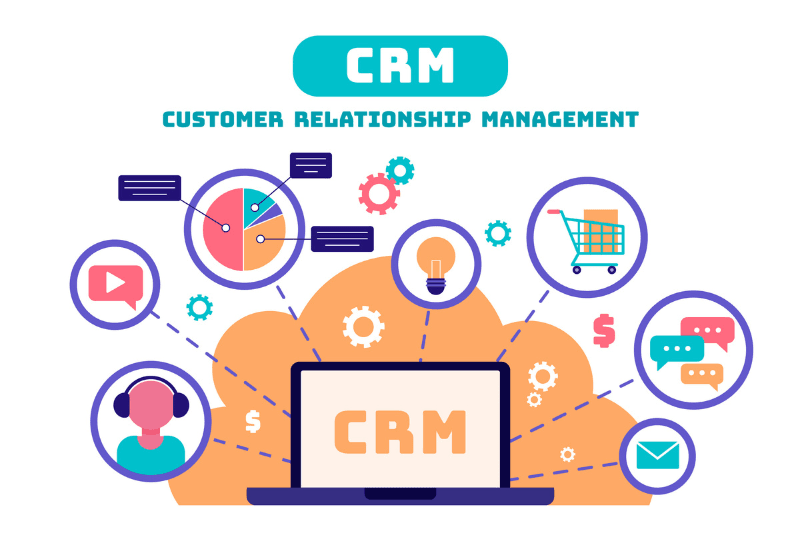
It’s very rare when CRM selection falls at the demo stage. It fails months after deployment, when the platform is no longer able to support a new business unit, a loyalty workflow breaks under volume or integration with a third-party rewards engine requires custom development that was never scoped. The decision to invest in a CRM is, at its core, a decision about future operational capacity, not current convenience.
For organizations that’s main growth driver is customer retention, the stakes are compounded. A CRM must do more than store the record of contacts. It has to be the operational backbone of all engagement, reward and retention initiatives the business runs. Before signing off on a platform, leadership teams are owed five rigorous questions. Let’s break them down and understand each one of them.
1. Does the CRM Support the Entire Customer Lifecycle — Not Just the Sales Funnel?
Most CRM platforms have been architected around acquisition. They monitor leads, pipeline and close deals effectively. What they do poorly, or not at all, is what comes after the transaction: onboarding, engagement scoring, reward eligibility, tier progression and win-back triggers.
For organizations deploying customer loyalty program software, the post-purchase lifecycle is where most of the commercial value is generated. A CRM that cannot model this lifecycle in detail will require workarounds that accumulate into serious technical debt. Evaluate whether the platform supports configurable lifecycle stages, event-triggered workflows, and customer segmentation beyond demographic fields.
2. How Does the CRM Handle Real-Time Data and Personalization at Scale?
Personalization is not a feature, it’s an infrastructure requirement. The ability to surface the right offer, trigger the right communication or adjust a reward in real-time, depends entirely on the way the CRM processes and acts on data as it arrives.
Batch processing, where customer data is updated nightly or at intervals, is operationally insufficient for enterprise loyalty programmes that operate across digital and physical touchpoints simultaneously. Ask vendors directly: how long does it take for a customer action to generate a CRM-controlled response? What are the limits to segmentation query complexity? How is the system performing under concurrent user load in multiple geographies?
Organizations that implement multi-tier retention programmes require answers to these questions before procurement and not after going live.
3. What Are the Integration Capabilities with Loyalty, Commerce, and Analytics Systems?
A CRM that is not able to communicate cleanly with the rest of the technology ecosystem is a liability. In the enterprise world, customer information is exchanged between e-commerce platforms, mobile applications, POS systems, marketing automation platforms and analytics engines. Every gap of integration introduces reconciliation complexity, data loss risk and degraded customer experience.
Specifically for organizations evaluating loyalty programs software, the integration between CRM and the loyalty engine is critical. Points accrual, redemption triggers, tier updates and reward fulfilment must operate without latency or manual intervention. Ask whether the CRM offers pre-built connectors for your core platforms, what the API architecture looks like and whether integration is managed natively or through a middleware dependency.
Middleware is not necessarily a bad thing, but has added cost, complexity and a potential point of failure that ownership teams do not typically account for in the beginning.
4. Can the Platform Scale with Organizational Growth Without Re-Platforming?
Technology decisions that are made at one point in business maturity often limit the next. A CRM that works well in a given market may struggle with multi-currency environments, regional data residency requirements or the structural complexity of a coalition programme that brings in external brand partners.
Evaluate scalability in three dimensions First, the data volume: can the platform accommodate a 10-fold increase in the number of member records without experiencing any performance degradation? Second, configurability: can new programme structures, business units or reward categories be added without developer engagement? Third, regulatory adaptability: as the business moves into new markets in the GCC, East Africa or South Asia, will the CRM be able to accommodate local regulatory compliance requirements, without the need for structural re-engineering?
Organizations that re-platform mid-programme cycles endure disproportionate costs, not only in licensing, but also in data migration, re-training staff and the inevitable disruption of customer-facing operations.
5. What Does the Vendor’s Implementation Track Record and Support Model Actually Look Like?
Capabilities noted in a product sheet have limited weight in terms of operation. What matters is whether those capabilities have been successfully deployed in environments similar to yours; in terms of industry, scale and programme complexity.
Request case studies from deployment in your sector. Enquire about the names of reference clients who will take a call. Look at the vendor’s implementation methodology: do they bring a structured programme strategy or just a platform and expect your team to configure it? Understand the post-go-live support model; who is responsible for incident response, what are the SLA commitments and how are product enhancements communicated and scheduled.
For enterprise clients, the vendor relationship is as important as the platform itself. A technically capable product with an under-resourced or inexperienced implementation team will perform at a lower level than a well-supported platform of moderate capability.
The Strategic Lens Behind All Five Questions
These questions have a common thread, they force the evaluation to go beyond features and towards fitness for purpose. A CRM serving a high growth loyalty operation requires the ability to manage lifecycle complexity, real-time data, deep integrations, scalable architecture and a delivery partner that can execute with precision.
Skipping any of these questions moves risk forward, into the implementation phase, or worse, into live operations where the cost of failure is measured in customer attrition and programme credibility.
If your organization is approaching a CRM investment with a loyalty-first mandate, Yegertek’s ENGAGE 365 platform is purpose-built to address each of these dimensions. Connect with the team to evaluate fit against your programme requirements.
FAQs
What is the most important feature to look for in a business-ready CRM?
The most critical capability is lifecycle management beyond the sales funnel, specifically the capability to support post-purchase engagement, reward workflows and retention triggers. A CRM that only manages acquisition creates structural gaps in any customer retention or loyalty programme.
How do CRM integrations affect loyalty programme performance?
Poor integrations cause data latency, reconciliation errors and broken reward triggers. For loyalty programmes based on accrual and redemption of points in real-time, the lack of integration directly degrades the member experience and leads to programme distrust over time.
When should an organization consider re-evaluating its CRM platform?
Re-evaluation is necessary when the platform cannot accommodate new market entry or programme structure changes and/or volume growth by members that cannot be accommodated without custom development. Scalability limitations are generally the first sign that a platform is approaching operational limits.
How does CRM vendor support impact long-term programme outcomes?
Vendor support has a direct impact on time-to-resolution in cases of incidents, the speed of feature adoption and programme agility. Organizations with great vendor partnerships consistently outperform organizations interested in managing platforms with limited after-implementation support structures.
Can a standard CRM support enterprise loyalty programmes without customization?
Rarely. Enterprise loyalty programmes include tier logic, multi-touchpoint engagement and analytics requirements which are not covered natively by standard CRM configurations. Purpose-built solutions or heavily configured platforms containing modules specific to a loyalty solution are generally needed for enterprise grade deployment.