PUZZLE CLIENTELING
Puzzle Clienteling Solutions: Turn Every In-Store Interaction into a High-Value Customer Relationship
Retail brands invest heavily in acquiring customers. Marketing campaigns drive footfall. Loyalty programmes incentivise repeat visits. E-commerce platforms capture digital demand. Yet the moment a customer walks into a physical store, many of these investments stall. The sales associate greeting that customer frequently operates without access to purchase history, loyalty status, communication preferences, or product affinity data. The result is a generic interaction that fails to reflect the relationship the brand has already built.
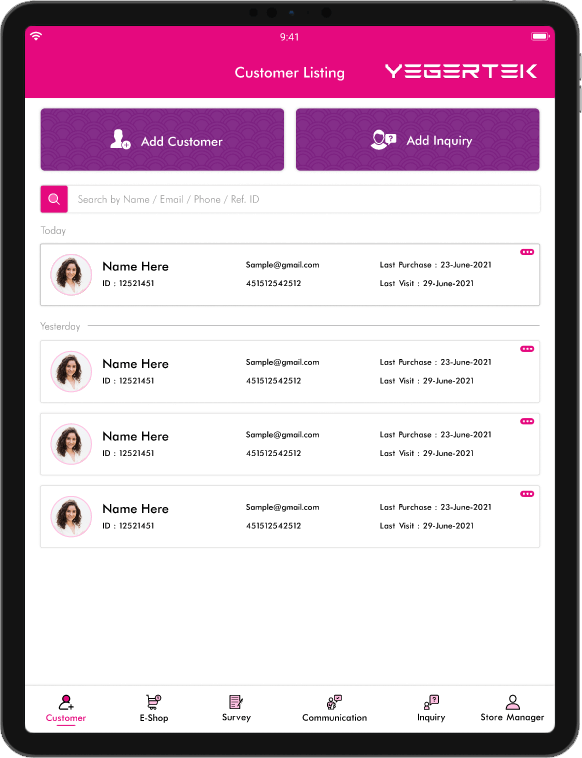
Puzzle clienteling solutions fill in this gap quite directly. Puzzle is a retail clienteling software platform, powered by Microsoft Dynamics 365, that puts the depth of the entire customer intelligence into the hands of in-store associates. It turns the associate from a transaction facilitator to a trusted advisor, who has access to the data, context, and tools to provide memorable experiences that customers will return to.
This page explains how Puzzle works, the capabilities it delivers, the business outcomes it drives, and the decision criteria leadership teams should evaluate when selecting the best clienteling software for their retail operations.
The Strategic Problem Puzzle Solves
Retailers with multiple stores and channels face a persistent disconnect. Customer information is aggregated across CRM systems, loyalty systems, point-of-sale terminals and e-commerce databases. Individually, each of these systems captures useful information. Collectively, they make up fragmented profiles no one team member can access in real-time for an ongoing customer interaction.
This fragmentation has quantifiable consequences. Associates are unable to recognise high-value customers on arrival. Product recommendations are defaulted to bestseller lists instead of personal preference patterns. Follow-up communications following a store visit are generic or non-existent. Loyalty programme benefits go unspoken as the associate has no visibility into customer’s tier, point balance or reward eligibility.
Puzzle removes this disconnect by acting as a single clienteling layer on top of existing systems. It brings together customer information from CRM, loyalty, POS or e-commerce into one, associate-facing interface, viewable on tablet or mobile. The associate sees everything the brand knows about the customer presented in a way that is designed for the pace and context of a live retail interaction.
Core Capabilities of Puzzle Retail Clienteling Software
Puzzle is not an independent CRM, or a lightweight contact management tool. It is purpose-built retail clienteling software designed to meet special demands of in-store selling environments. Its capability set ranges across five operational pillars.
1. Unified Customer Profiles with Real-Time Data Access
Every customer interaction starts with context. Puzzle brings the data from Microsoft Dynamics 365, loyalty management systems, e-commerce platforms and POS terminals into one profile view. Associates can instantly access purchase history, preferred products, loyalty tier status, outstanding service requests, preferred communication channels and previous interactions in-store. This unified view helps to ensure that each engagement builds on the existing relationship, rather than starting from scratch.
2. Personalised Product Recommendations
Puzzle clienteling solutions are not limited to the display of basic profiles. The platform breaks down purchase patterns, browsing behaviour and product affinities so that it can surface relevant recommendations that the associate can present during the interaction. These are not algorithm only suggestions, but are guided insights that combine data intelligence with the associate’s personal knowledge of the customer. This hybrid approach is what makes effective clienteling tools different from generic product suggestion engines.
3. Omnichannel Communication and Outreach
The customer relationship does not conclude with the end of the store visit. Puzzle allows associates to keep in touch through personalised follow-up messages via SMS, email, and WhatsApp. Associates may send out product availability notifications, invitations to exclusive events, new arrivals based on expressed preferences or even just follow up on a previous conversation. This 24/7 outreach capability transforms the associate from being a store-based resource to being a dedicated personal advisor.
4. Customer Segmentation and Smart Lists
Store managers and associates can analyze their customer base by segmenting their customer base using behavioural information, transactional data and customer loyalty data. Puzzle supports the creation of dynamic smart lists which automatically update as customer behaviour changes. For example, a list of high-spend customers who have not made a purchase in 60 days can be used to send targeted re-engagement campaigns. A list of customers who are nearing a loyalty tier upgrade can be used to initiate proactive outreach with an offer to close the gap. These clienteling tools allow for precision not possible with manual processes at scale.
5. In-Store Task Management and Associate Performance Tracking
Puzzle includes workflow management features that allow store managers to assign tasks, set follow-up reminders, and track associate activity against customer engagement targets. This operational layer ensures that clienteling does not depend on individual initiative alone; it becomes an embedded, measurable part of store operations. Performance dashboards provide visibility into outreach volume, response rates, conversion from personalised interactions, and customer satisfaction indicators.
Have Any Questions? Call Us Today!
+971-52-714-7218
Brochures
Download our product factsheet to know more about our product and its features.
Why Puzzle Qualifies as the Best Clienteling Software for CRM-Integrated Retail
The clienteling software market comprises a variety of clienteling software solutions ranging from lightweight mobile apps to enterprise-level software integrated as part of a larger commerce ecosystem. What distinguishes the best clienteling software from adequate alternatives is how deeply integrated the software is, how good the data access and the operation discipline the platform supports.
Puzzle delivers on three dimensions that enterprise retailers should prioritise in their evaluation.
Native CRM Integration via Microsoft Dynamics 365
Puzzle is designed based on the Microsoft Dynamics 365 ecosystem. This is not a bolt on integration, it is a native connection to ensure customer data is flowing bi-directionally between CRM and the clienteling interface in real time. Changes made in CRM, by marketing, customer service or sales are immediately reflected in the associate’s Puzzle view. Conversely,in-store interactions captured through Puzzle feed back into the CRM, enriching the customer profile for all teams downstream. This two way flow of information is a crucial one for the organisations who consider clienteling a strategic function as opposed to a store level convenience.
Loyalty Programme Connectivity
Most retail clienteling software platforms treat loyalty as an external system. Puzzle integrates loyalty programme data as a first-class data source within the associate interface. Point balances, tier status, reward eligibility, redemption history, and programme engagement metrics are all visible and actionable during the customer interaction. This connectivity allows associates to reference loyalty benefits naturally, reinforcing programme value while creating personalised incentives that drive both immediate transactions and long-term retention.
Scalable Across Store Networks and Geographies
Puzzle supports multi-store, multi-brand and multi-geography deployments. This is a critical property of scalability for retail groups operating across the UAE, GCC and more, where customer expectations, language requirements, and regulatory context vary from market to market. The platform supports bilingual interfaces, market-based configurable workflow rules and centralized reporting that provides visibility into the performance of clienteling across the entire network for headquarters.
Measurable Business Outcomes of Deploying Clienteling Tools
Leadership teams assessing clienteling investments require clarity of commercial impact. Puzzle provides measurable value in four dimensions that are important to C-suite decision-makers.
Higher Conversion Rates from In-Store Traffic
When associates engage customers with relevant context, personalised recommendations, and loyalty awareness, conversion rates from store visits increase meaningfully. Customers who feel recognised and understood are significantly more likely to complete a purchase and add complementary items to their basket. Puzzle provides the data foundation that makes this level of personalised selling possible at every store, with every associate, on every shift.
Increased Average Transaction Value
Personalised recommendations, informed by purchase history and product affinity data, enable natural cross-selling and upselling. Associates using Puzzle can identify relevant accessories, complementary products, or premium alternatives based on the customer’s established preferences rather than relying on generic suggestive selling scripts. This data-informed approach increases average transaction value without creating a pushy or transactional dynamic.
Improved Customer Retention and Repeat Visit Frequency
The personalised follow-up capability within Puzzle is a direct retention mechanism. Customers who receive thoughtful, relevant outreach from a named associate develop stronger brand affinity than those who only receive mass-market communications. Over time, this relationship-driven approach reduces churn and increases the frequency of repeat visits, directly impacting customer lifetime value.
Operational Visibility and Associate Accountability
Puzzle’s task management and performance tracking features give store managers and regional leaders a clear view of clienteling activity across their teams. This visibility enables data-driven coaching, identification of high-performing behaviours, and consistent execution of clienteling standards across all locations. Without this operational layer, clienteling remains inconsistent and unmeasurable.
How Puzzle Works: From Deployment to Daily Operations
Understanding the operational flow of Puzzle assists leadership teams to determine operational readiness for implementation and establish realistic expectations for adoption timelines.
Phase 1: Data Integration and Profile Unification
The deployment starts with connecting Puzzle to the organisation’s existing data infrastructure. This includes Microsoft Dynamics 365 CRM, loyalty management platforms, point of sales (POS) systems, and e-commerce databases. During this phase, customer profiles are unified, duplicates are resolved and data quality is validated to ensure associates receive accurate, complete customer views from day one.
Phase 2: Configuration and Workflow Design
Puzzle is set up to reflect the specific clienteling strategy of the organisation. This involves determining customer segmentation rules, setting up smart lists, setting up communication templates, establishing task assignment workflows, and aligning performance metrics with business goals. The configuration phase is also concerned with users permissions, store hierarchy structures and regional customisation requirements.
Phase 3: Associate Training and Rollout
Adoption is the single biggest determinant of clienteling success. Puzzle’s interface is for usability on the store floor, however, to be effective the deployment requires structured training that goes beyond navigating the platform. Associates learn about how to interpret the customer data, how to create position-based personalised conversations based on the profile information, and how to use follow-up tools to continue the relationship after the visit. A phased approach, implementing processes in pilot stores before wide network implementation, is suggested to help refine processes and create internal champions.
Phase 4: Continuous Optimisation
Post-launch, the focus shifts to performance analysis and continuous improvement. Store managers review engagement metrics, identify skill gaps, and adjust workflows based on what the data reveals. Segmentation strategies are refined as customer behaviour patterns become clearer. New use cases, such as event-based outreach or seasonal VIP campaigns, are developed and tested iteratively.
Industry Applications: Where Puzzle Delivers the Greatest Impact
Puzzle clienteling solutions are intended for any retail environment where the in-store customer interaction has a direct impact on conversion, retention, and lifetime worth.
Luxury and Premium Retail
High value customers expect to be recognised and provided with personalised service. Puzzle equips associates with complete customer histories, wish lists and profile preferences that allow them to deliver the level of personalised attention that luxury buyers demand. VIP identification, exclusive event invitations, attentive product alerts based on the collection launch, are all supported natively.
Fashion and Apparel
Style choices, size history and seasonal buying patterns provide more relevant recommendations. Associates can look back at past purchases to recommend co-ordinating pieces, alert customers to new arrival in favoured categories and manage post-visit follow up with personalised outfit recommendations.
Jewellery and Watches
Longer consideration cycles and high transaction values make relationship continuity essential. Puzzle supports milestone reminders such as anniversaries and birthdays, wish list tracking, and associate-specific customer assignments that ensure relationship continuity across multiple visits.
Beauty and Cosmetics
Product replenishment cycles, skin type profiles, and treatment preferences are natural opportunities for proactive outreach. Puzzle’s communication tools enable associates to schedule personalised product reminders based on estimated usage patterns to drive repeat purchases with as little friction as possible.
Multi-Brand Retail Groups
For organisations that have different brand ideas under the same corporate wing, Puzzle provides brand level segmentation with centralised reporting. This way, each brand can have its own clienteling approach, while providing headquarters with cross brand visibility into customer engagement and associate performance.
Evaluate Puzzle for Your Retail Operations
The most effective way to assess whether Puzzle is the right fit for your organisation is to begin with a guided demonstration aligned to your specific retail environment, customer data landscape, and associate workflow requirements. Yegertek works with retail enterprises across the UAE, KSA, Qatar, Bahrain, and broader markets to implement Puzzle as part of an integrated customer engagement ecosystem that connects clienteling, loyalty, CRM, and analytics.
Request a demo to see how Puzzle transforms in-store associate capabilities and drives measurable commercial outcomes for your retail network.
How It Works

Frequently Asked Questions: Puzzle Clienteling Solutions
The best clienteling software for retail stores in UAE is one that combines deep CRM integration, real-time customer data access for associates, and omnichannel communication tools built for the regional market. Puzzle by Yegertek is designed natively on Microsoft Dynamics 365, which means it connects with loyalty, POS, and e-commerce systems without fragile third-party middleware. It provides associates with unified customer profiles, personalised product recommendations, and follow-up outreach via SMS, email, and WhatsApp. For UAE retailers managing high-value, relationship-driven customer bases, Puzzle delivers the data depth and usability that generic platforms cannot match.
Implementation costs differ according to the number of stores, volume of customer records to be unified, complexity of system integrations, and depth of configuration required for your specific workflows. Licensing models are often based on active users or store locations. Discovery and data integration is the greatest up-front investment. Running costs are involved in the form of platform licensing, training new associates, and optimisation support. A good scoping exercise before commitment will allow for budget alignment.
Puzzle is a retail clienteling tool that helps store associates give personalised service to customers by placing each customer’s complete profile directly in their hands during live interactions. Associates can view purchase history, product preferences, loyalty tier, and past communications on a tablet or mobile device the moment a customer walks in. Unlike generic CRM dashboards, Puzzle is purpose-built for the pace of in-store selling, so associates spend their time advising rather than searching for information. The platform also supports personalised follow-up messaging through SMS, email, and WhatsApp to continue the relationship after the visit ends.
Effective clienteling tools work with CRM and loyalty data by pulling both sources into a single associate-facing interface, and Puzzle does this natively through its Microsoft Dynamics 365 foundation. Rather than treating loyalty as an external feed, Puzzle surfaces point balances, tier status, reward eligibility, and redemption history alongside CRM contact records, purchase history, and service interactions. This unified view means associates can reference loyalty benefits mid-conversation without switching screens or systems. For organisations using ENGAGE 365 for loyalty management, the connection is seamless. Third-party loyalty platforms can also be integrated through standard APIs.
Puzzle is highly configurable. Segmentation rules, smart list criteria, communication templates, task workflows, performance metrics, and user permissions can all be tailored to match your operational requirements. Regional variations, such as bilingual interfaces for the UAE and GCC markets, brand-specific configurations for multi-brand groups, and market-specific compliance rules, are all supported. Customisation is addressed during the configuration phase and can be adjusted post-launch as business needs evolve.
Post-deployment support includes performance monitoring, workflow optimisation, associate onboarding support for new hires, and platform updates. Regular review cycles assess clienteling performance against established KPIs and identify opportunities for refinement. Support also covers technical assistance for new integrations, additional store rollouts, and the development of new use cases such as seasonal campaigns or VIP event management. Structured retainer engagements are available for organisations seeking continuous optimisation.
Puzzle is an excellent clienteling platform for luxury retail brands in Dubai because it is built around the high-touch, relationship-driven selling model that luxury customers expect. Associates can instantly access a customer’s full purchase history, wish lists, preferred collections, and loyalty status the moment they enter the boutique. VIP identification, exclusive event invitations, and personalised new-arrival alerts are all handled natively within the platform. Dubai’s luxury retail environment demands that every interaction feels curated, and Puzzle provides the data infrastructure and associate tools to deliver that experience consistently across every store location.
Puzzle solves this by building unified customer profiles that your sales staff can access before and during every store visit. The platform pulls in data from CRM records, loyalty programmes, past purchases, and e-commerce browsing behaviour, so when a recognised customer enters the store, the associate already has their size preferences, brand affinities, recent orders, and loyalty tier visible on a tablet. Smart lists can also flag high-value customers or those due for a follow-up, giving your team time to prepare personalised talking points. The result is that sales staff know customer preferences before they walk in and can open conversations with genuine relevance.
Puzzle is a leading in store clienteling solution for better customer experience in the Middle East, built specifically for the demands of multi-market retail operations across the UAE, Saudi Arabia, Qatar, and Bahrain. It supports bilingual Arabic and English interfaces, region-specific workflow rules, and centralised reporting for headquarters teams overseeing multiple geographies. Associates use the platform to deliver context-rich, personalised interactions that reflect local shopping expectations where customers place high value on recognition and attentive service. Puzzle connects loyalty, CRM, and POS data into a single view, helping retailers across the Middle East consistently elevate the in-store experience.
Clienteling software helps sales associates increase conversions by replacing generic selling with data-informed, personalised engagement. With Puzzle, associates can see a customer’s purchase history, product preferences, and loyalty status in real time, enabling them to recommend items the customer is genuinely likely to buy. This targeted approach raises both conversion rates and average basket size because recommendations feel relevant rather than scripted. Associates can also trigger personalised follow-up messages after the visit, re-engaging customers who were considering a purchase but did not complete it. Over time, this relationship-driven method turns more store visits into completed transactions.
For retail and fashion brands operating across the GCC, the best clienteling platform is one that handles multi-store, multi-brand complexity while supporting regional language and workflow requirements. Puzzle meets all of these criteria natively. Fashion associates can use past purchase data, size history, and seasonal buying patterns to recommend coordinating pieces and new arrivals tailored to each customer’s established style. The platform supports Arabic and English, configurable store hierarchies, and centralised analytics that give regional leaders visibility across every market. Puzzle is the best clienteling platform for retail and fashion brands in GCC because it combines deep data integration with practical, floor-level usability.